
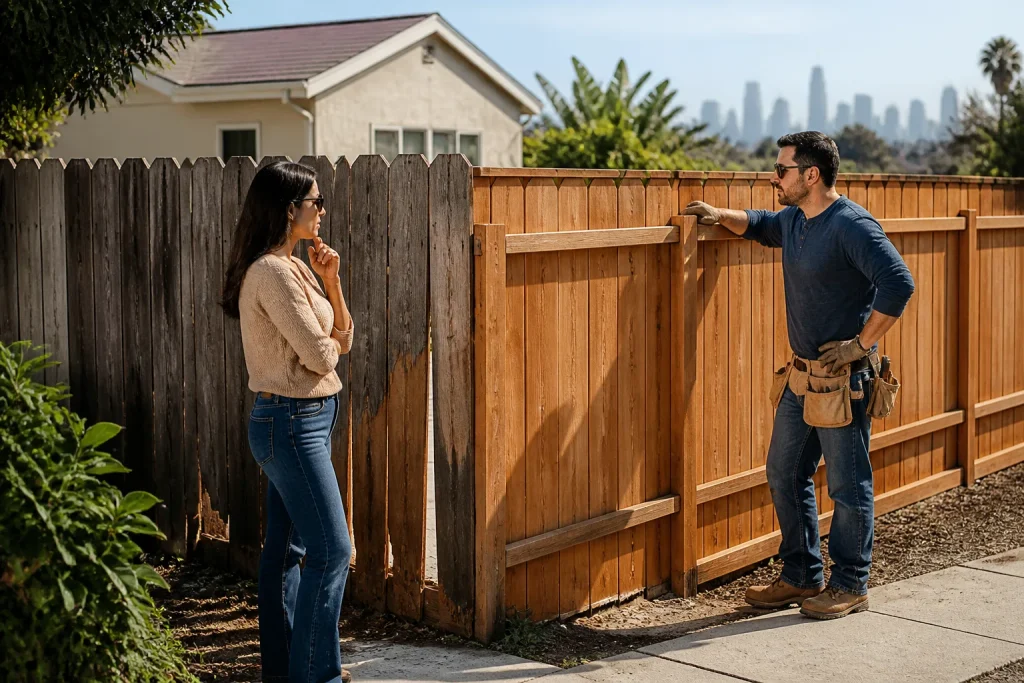
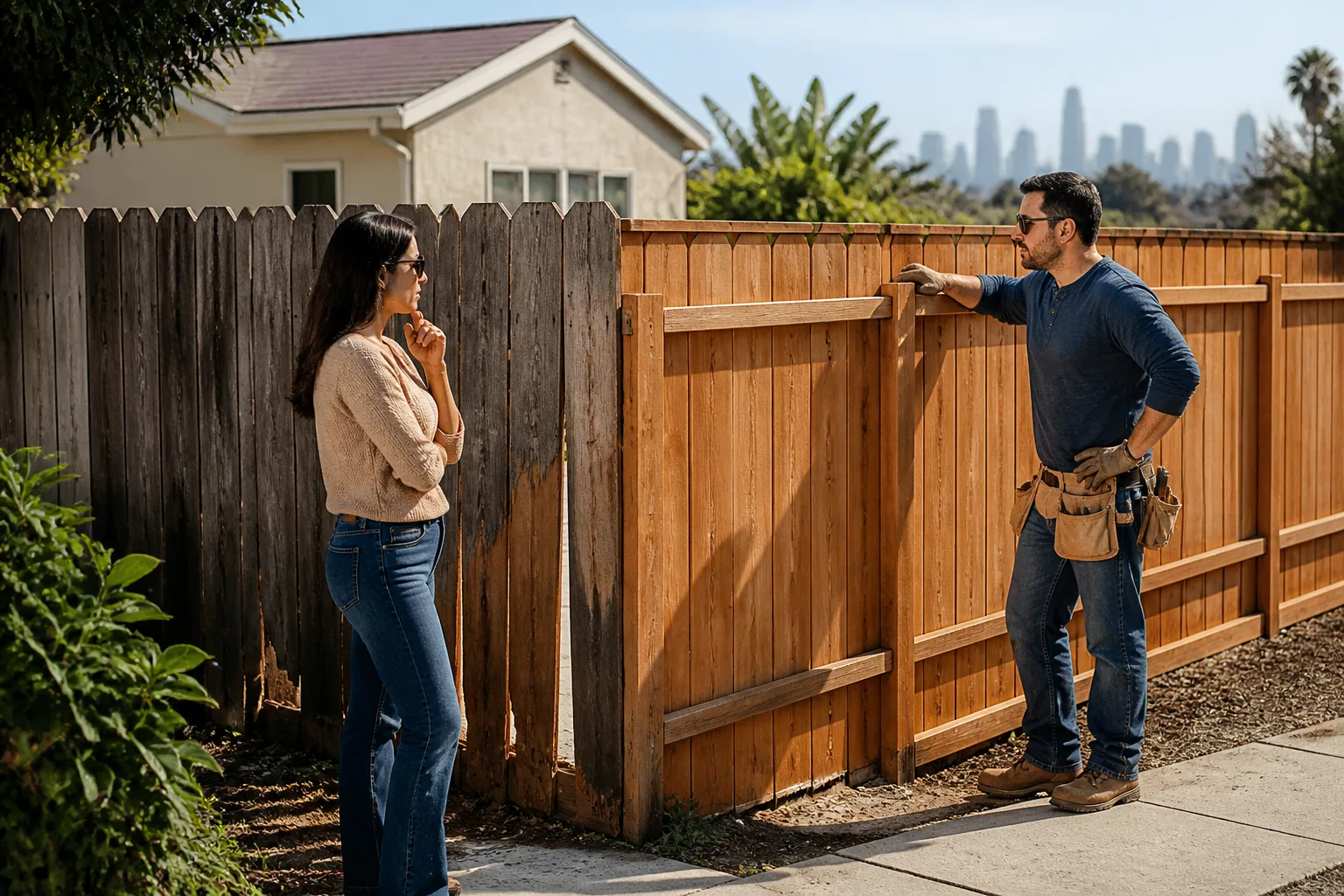
Fence Installation: Repair or Replace? How Los Angeles Homeowners Decide
That fence in your backyard that “just needs a couple of boards” is usually a bigger decision than it looks. In Los Angeles, sun, dry rot, termites, and Santa Ana winds work on wood and vinyl far faster than most homeowners realize, and a fence that reads 70% fine from the patio can be structurally 40% compromised where you can’t see it. Here’s the decision framework we use on real jobs: match material lifespan to LA conditions, check for the three structural failure signs, then run the five-year math on patching versus replacing before you spend another dollar on repairs.
If you’d rather have a pro look at it than guess, call (888) 427-1733. Estimates are free, and we’ll tell you straight whether you’re looking at a repair or a replacement.
Key Takeaways
- Material type sets the clock. Under Los Angeles conditions, wood fences average 10 – 15 years, vinyl 15 – 20, wrought iron 20 – 30+, and block walls can outlast the house.
- Three structural signs mean repair money is wasted: leaning posts, rot at the soil line, and termite damage in the rails, no matter how good the boards look.
- LA’s termite pressure and coastal salt air push the repair-to-replace tipping point years earlier than national averages suggest.
- Over five years, serial repairs almost always cost more than one clean replacement with a warranted contractor.
What’s the Real Lifespan of Each Fence Type in Los Angeles?
Lifespan is the first thing to nail down, because a fence near the end of its service life isn’t a repair candidate, it’s a replacement waiting to happen. Here’s what we see across Los Angeles, from the Valley to the coast:
- Wood (cedar, redwood, pressure-treated pine): 10 – 15 years in most of LA. Inland Valley heat and UV exposure dry and crack boards faster; coastal moisture feeds rot at the base.
- Vinyl: 15 – 20 years. Vinyl holds up well to LA sun but gets brittle and can crack in sustained heat, and posts can shift in our expansive clay soils.
- Wrought iron and steel: 20 – 30+ years. The metal lasts; what fails is the finish. Coastal salt air rusts powder coat and paint faster than inland homeowners expect.
- Block and masonry walls: 30+ years, often the life of the property. Repairs are usually cosmetic or structural at the footing, not the wall itself.
- Chain-link: 15 – 20 years. Cheap to replace, rarely worth patching once the mesh sags and the posts rust through.
The takeaway: know your material’s clock. If your wood fence is 12 years old and failing in more than one spot, you’re not repairing, you’re delaying. That’s a distinction Los Angeles homeowners pay for twice when they get it wrong.
What Are the Three Structural Failure Signs That Mean Replace, Not Repair?
Surface appearance lies. These three signs tell you the structure is gone and no amount of new pickets will fix it:
- Leaning or wobbly posts. If you can rock a post by hand, the footing has failed. In LA’s clay-heavy soils, posts heave and rot at the ground line, and a leaning post pulls the whole run out of plumb.
- Rot at the soil line. Push a screwdriver into the base of any post. If it sinks in easily, the wood is gone where it matters most. This is the single most common hidden failure we find.
- Termite damage in the rails and posts. LA is one of the highest termite-pressure metros in the country. If you’re seeing mud tubes, hollow-sounding wood, or frass, the fence is being eaten from the inside.
One surface board? Repair it. Two or three of these structural signs together? Replacement is the honest answer. We pulled a run out of a backyard in Sherman Oaks last month that looked fine from the house; every third post snapped at the base when we leaned on it.
Why Does Los Angeles Wear Fences Faster Than National Averages?
Most repair-or-replace advice online is written for a generic American climate. Los Angeles isn’t generic, and three local pressures move the tipping point earlier:
- Termite pressure. Our warm, dry climate and year-round activity keep subterranean and drywood termites working on wood fences constantly. A wood fence here can lose structural integrity years before the same fence would in a colder market.
- Salt air near the coast. From Santa Monica to Long Beach, salt-laden air accelerates corrosion on metal fasteners, hinges, and wrought iron. A gate that’s fine in Pasadena may be rusting from the inside in Venice.
- Santa Ana winds and UV. Seasonal wind events stress weak posts and panels, while relentless sun dries and splits wood and embrittles vinyl. That combination of heat, wind, and dryness is brutal on anything standing in the open.
Add our expansive clay soils, which shift with wet and dry cycles and work posts loose, and the message is clear: build for Los Angeles conditions and expect a shorter repair window, not a longer one.
Does a Fence Repair in Los Angeles Need a Permit, and How Does That Change the Math?
This is where the cost equation gets interesting, and where a lot of homeowners get surprised. In general, a like-for-like repair or replacement of an existing fence at the same height and location often doesn’t require a permit, but rules vary by jurisdiction, and certain changes do trigger review. Here’s the reality check:
- Same-height, same-line replacement: often no permit, but confirm with your local building department because requirements differ across the City of Los Angeles and surrounding jurisdictions.
- Increasing height, changing material to masonry, or altering property lines: these commonly require a permit, and sometimes a survey or neighbor sign-off.
- Fences near pools or on slopes: additional code considerations can apply.
Why this matters for the money: if a repair or an upgrade crosses into permit territory, you’re now paying for drawings, review time, and inspection, which can wipe out the savings you thought a patch job would deliver. A licensed contractor pulls the permits and passes the inspections, so the cost of doing it right is built in upfront instead of surfacing as a surprise later. Upfront pricing, no surprises is exactly the point here.
Repair vs. Replace: A Five-Year Cost Projection for Los Angeles
National averages won’t tell you much, so here’s the kind of five-year math we run with Los Angeles homeowners. These are planning ranges, not a quote; your exact numbers depend on linear footage, material, and access:
- Serial repairs (wood): patching boards, replacing a post or two, and re-staining every year or two often runs several hundred to over a thousand dollars annually. Over five years, that can add up to well over the cost of a straight replacement, and you still own a fence that’s failing.
- One clean replacement: a single upfront investment with a written workmanship guarantee, spreading the cost across a lifespan of 10 – 20+ years depending on material, with zero repeated patching.
Run the numbers on your own fence: five years of patches plus the eventual replacement, versus one warranted replacement now. In our experience across Los Angeles, the patch-it-again path rarely wins. When it does, it’s because the fence is early in its life and the failure is genuinely cosmetic.
If you want a real number instead of a range, that’s what a free estimate is for. We put the repair option and the replacement option side by side in writing, so you’re deciding with facts.
When to Call a Pro
You can swap a loose picket yourself. But when posts are rotting at the base, the run is out of plumb, termites are involved, or a permit is in play, it’s time for a pro. Structural fence work involves setting posts in our tricky soils, tearing out compromised material safely, and getting the line, height, and fasteners right so the fence survives the next Santa Ana. Our technicians have up to 12 years of experience, arrive background-checked and in uniform, and every job is backed by our 730-Day Done Right Promise: if it’s not done right, we make it right.
Related services in Los Angeles: if the project grows, we also handle Driveway & Pavers in Los Angeles and Home Additions & ADU in Los Angeles, all from one trusted contractor.
The Bottom Line
Repair the fence only when the structure is sound and the failure is cosmetic. Replace it when posts are failing, rot has reached the soil line, or termites are at work, because LA’s climate has already shortened the repair window. Run the five-year math, check the permit rules, and decide on real numbers. If you’re in Los Angeles and want an honest read on your fence, Fence Installation in Los Angeles is where we start, and Groundwork Construction Co. of Los Angeles offers free estimates, backed by our 730-Day Done Right Promise and 0% financing for 18 months. Call (888) 427-1733 to schedule yours, and see why homeowners start at our Groundwork Construction Co. of Los Angeles home page to plan the whole project.
Frequently Asked Questions
Replacement is usually cheaper over five years when the fence is failing structurally. A single repair is cheaper upfront, but repeated patches on wood in Los Angeles often cost more than one warranted replacement. Call (888) 427-1733 for a free estimate that compares both options in writing.
A wood fence typically lasts 10 – 15 years in Los Angeles, shorter near the coast or where termites are active. UV exposure, Santa Ana winds, and rot at the soil line are the main culprits. If yours is near that range and failing in multiple spots, replacement is the smarter call.
Often not for a same-height, same-line replacement, but requirements vary by jurisdiction and changes like added height or a switch to masonry commonly require one. We confirm the rules and pull the permits so inspections pass. Call (888) 427-1733 for a free estimate.
Leaning or wobbly posts, rot at the soil line, and termite damage in the rails and posts are the three signs that repair money is wasted. Any two together means replace. Call (888) 427-1733 and we’ll tell you straight which one you’re facing.
Written by the team at Groundwork Construction Co. of Los Angeles.
Need Construction Help?
Call Groundwork Construction Co. of Los Angeles - licensed & insured, here with fast after-hours help in Los Angeles.
(888) 427-1733