
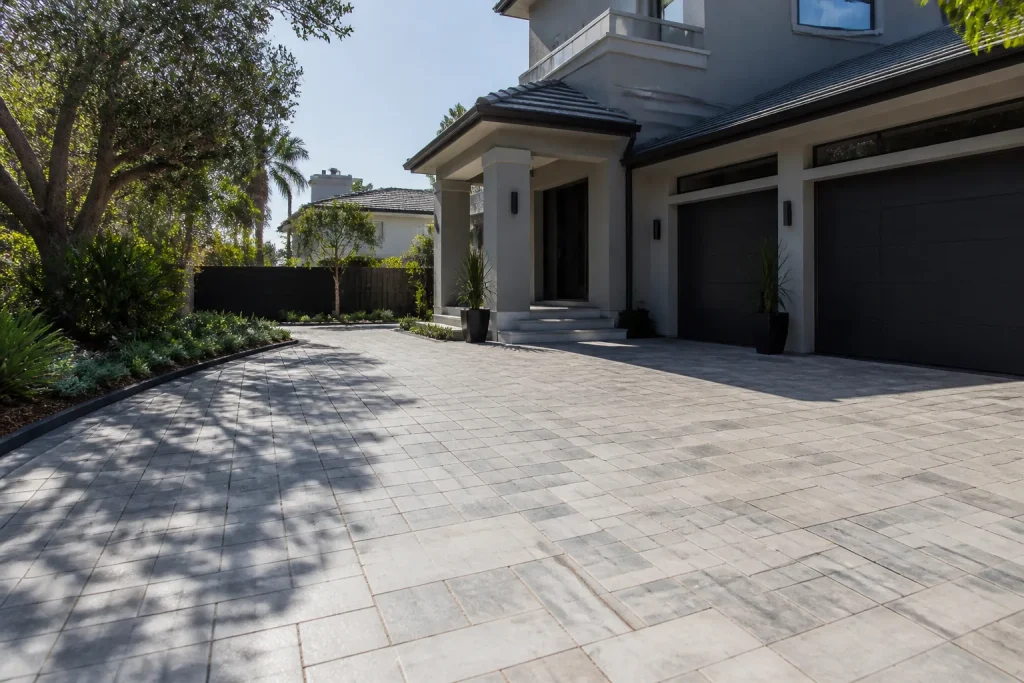
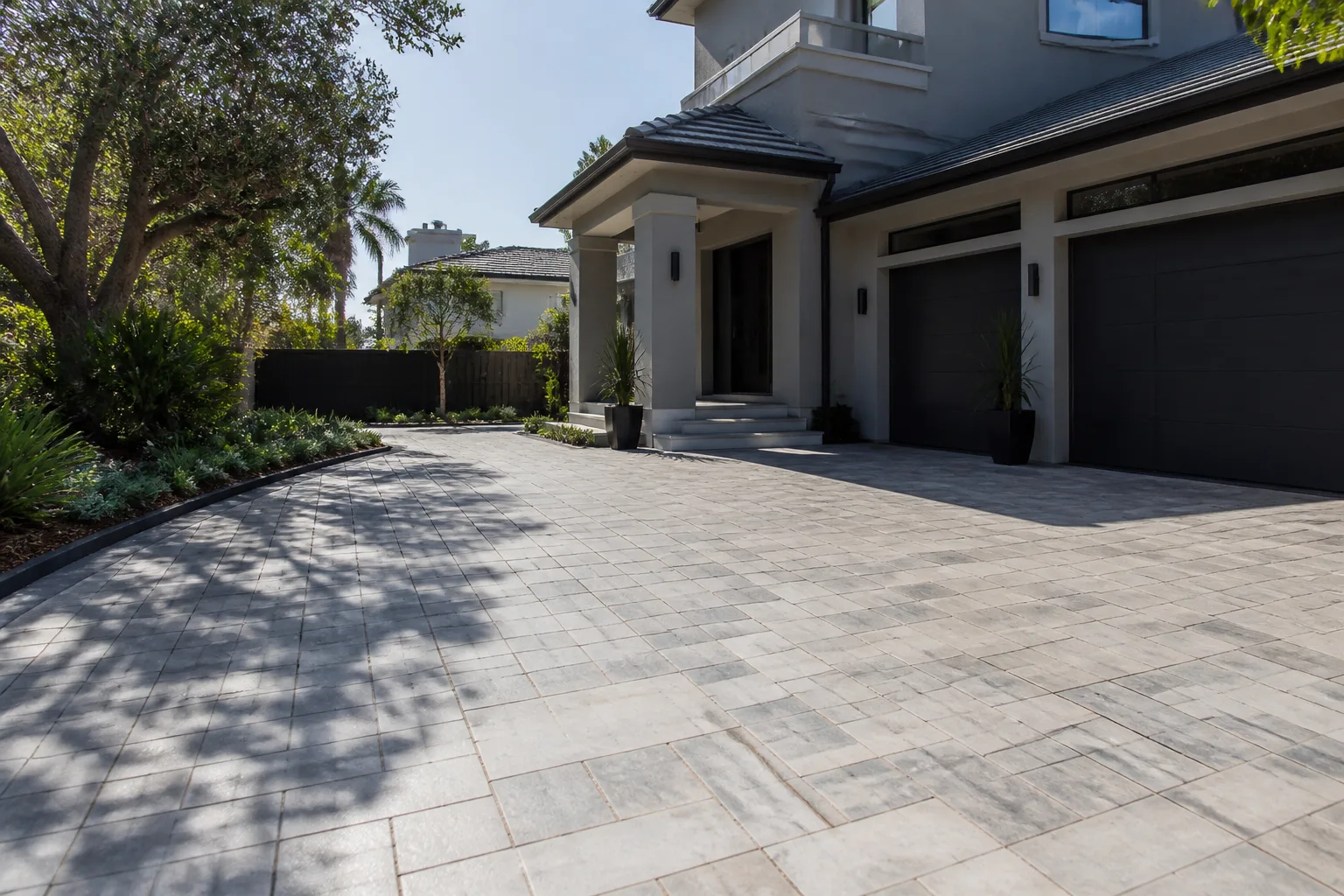
Silestone Driveway & Pavers in Los Angeles: A Homeowner’s Guide
Silestone resists staining better than natural stone in independent testing, which is why it keeps showing up in conversations about Los Angeles driveways. But that surface advantage disappears the moment the installation crew uses the wrong joint compound or skips the seal coat. In our experience across Los Angeles, most Silestone driveway complaints trace back to installation, not the material. If you’d rather not gamble on getting it right yourself, call (888) 427-1733 for a free estimate.
What Is a Silestone Driveway, and Does It Actually Work for Los Angeles Homes?
Silestone is an engineered quartz surface made from roughly 90% crushed quartz bound with polyester resin, and it does hold up outdoors in Los Angeles when it’s installed as a paver system rather than a slab. The confusion most homeowners hit is simple: Silestone’s reputation comes from kitchen counters, and a driveway asks very different things of a surface. Los Angeles driveways deal with intense UV, hard seasonal rain in a concentrated window, and the grit that comes off tires on concrete streets like those off Van Nuys Boulevard. Engineered quartz handles the staining and color stability well. Where it needs help is impact and thermal movement, which is why the paver format and the substrate underneath matter more than the brand name on top. A thick slab outside is a crack waiting to happen. A properly bedded paver, with the right joint system, is a different animal entirely.
How Do Silestone Pavers Compare to Natural Stone and Concrete on Load, Slip, and Thermal Expansion?
On the three metrics that decide whether a driveway survives fifteen Los Angeles summers, here’s where Silestone actually lands against the alternatives:
- Load rating: Engineered quartz pavers are dense and compressive strength is high, but the surface is harder and less forgiving of point loads than concrete pavers. A concentrated load from a jack or a heavy delivery truck can chip an edge. Concrete pavers flex slightly; quartz does not.
- Slip resistance: Silestone’s honed and textured finishes score well when wet, but polished finishes should never go on a driveway. We specify textured surfaces for anything with a slope, which most Los Angeles hillside driveways have.
- Thermal expansion: Quartz moves with heat more than concrete. That’s the reason joint spacing and flexible joint compound are non-negotiable. Skip them and you’ll see edge cracking within two or three seasons.
Natural stone like travertine or bluestone wins on impact resistance and repairability, since a damaged paver can be swapped. Concrete wins on cost and simplicity. Silestone wins on stain resistance and color consistency from one paver to the next, which is why it’s popular on driveways where the homeowner wants a uniform look and no visible variation between stones. In our years doing driveway work across Los Angeles, we’ve found that the material choice matters less than the installation protocol. Our technicians have up to 12 years of experience reading these conditions, and the honest answer is that a poorly installed concrete paver driveway outlasts a well-marketed quartz one installed carelessly.
Will Silestone Hold Its Color in Los Angeles Sun Over Five-Plus Years?
UV stability is where Silestone earns its reputation in a high-sun climate. Engineered quartz with UV-stable pigments holds color considerably better than many natural stones and better than most standard concrete pavers, which can fade toward chalky gray after several intense Los Angeles summers. The product lines that hold best are the darker, textured finishes and the lines specifically engineered for exterior use. Light grays and whites show dust and tire marks faster even when the color itself is intact, so a mid-tone or deeper finish is the practical pick for a Los Angeles driveway that sees full afternoon sun. What you need to know before buying:
- Ask for the manufacturer’s exterior-rated colorfastness documentation, not the countertop spec sheet.
- Confirm the specific line is rated for outdoor, vehicle-traffic use.
- Understand that resin content affects UV performance, so lighter resin-heavy colors tend to shift more than dense quartz colors.
Five-plus years of direct Los Angeles sun is a fair test, and exterior-rated quartz generally passes it. The failure cases we see come from interior-grade material sold into an exterior job. That’s a specification problem, not a Silestone problem. If you’re comparing finishes alongside a broader exterior plan, our team handles Driveway & Pavers in Los Angeles as a full installation rather than a surface swap, which is where these calls usually start.
What Installation Requirements Are Unique to Silestone Compared to Standard Pavers?
Silestone pavers don’t install like concrete pavers, and treating them the same way is the single most common mistake we correct on Los Angeles jobs. Three things differ:
- Cutting: Quartz requires wet cutting with a diamond blade rated for engineered stone. Dry cutting generates excessive heat that can scorch the resin and leave a visible burn line on the edge. Every cut edge also needs to be re-sealed before it goes down.
- Sealing: The pavers need a penetrating sealer applied to a clean, dry surface, and the edges need attention most installers rush. Skipping the seal coat is what erases the stain-resistance advantage Silestone is known for.
- Joint filling: This is where the money is lost. Silestone needs a flexible, polymeric joint compound rated for engineered quartz, not standard sand or a rigid cement joint. Rigid joints transfer thermal movement into the paver and cause cracking. Flexible joints absorb it.
A courtyard job we finished in Hancock Park last spring is a good illustration. The pavers were beautiful, but a previous crew had used a rigid cement joint. One hard rain and a hot week later, four pavers along the edge had hairline cracks. We pulled and reset them with the correct flexible joint compound, re-sealed the cut edges, and the surface has been quiet since. That’s the whole thesis of this piece in one job: the material was fine. The protocol wasn’t. If you’re planning a broader exterior project alongside the driveway, our Fence Installation in Los Angeles work pairs naturally with paver installs, and getting the two scheduled together saves you a lot of moving parts.
How Much Do Silestone Driveways Cost in Los Angeles?
Silestone driveway installation in Los Angeles typically lands between $18 and $32 per square foot installed, depending on the product line, the slope of the drive, and the base prep required. That’s a real premium over standard concrete pavers at $8 to $14 per square foot and natural stone at $14 to $22. Here’s the honest breakdown of where the value holds and where it doesn’t:
- Where Silestone earns its price: Stain resistance on a driveway under trees or near a grill, uniform color across a large visible surface, and colorfastness in full sun. On a highly visible entry driveway in Los Angeles, the visual consistency is worth real money.
- Where concrete wins per dollar: Long driveways where you’ll never see the far end, budget-sensitive projects, and any spot where heavy truck traffic is expected.
- Where natural stone wins per dollar: Repairability at the paver level and impact resistance on driveways that take real abuse.
Base prep is the line item that swings the number most. A Los Angeles yard with heavy clay and poor drainage can add $4 to $8 per square foot to the total, and that’s non-negotiable if you want the surface to last. Upfront pricing, with the number you see being the number you pay, means the quote you get is the quote you sign. No change orders mid-job. Pair that with 0% financing for 18 months and $1,000 off projects over $10,000, and the cost picture gets much more manageable. Call (888) 427-1733 for exact numbers on your specific drive.
What Maintenance Keeps a Silestone Driveway Looking as Specified?
A Silestone driveway needs an annual schedule, and skipping it is what makes people say the material “didn’t last.” What’s required:
- Annual re-seal: A penetrating sealer every 12 to 18 months maintains the stain resistance. In Los Angeles, spring is the right window, before the sun season peaks.
- Joint inspection: Check the flexible joint compound each year for lifting or shrinkage. Repair any gap immediately, since water in the joint is the fast path to paver movement.
- Routine cleaning: A pH-neutral cleaner, no pressure washing above a moderate setting, and no acid-based products. Quartz resin does not like acid.
- Tire mark management: Darker finishes hide rubber marks better; lighter finishes need periodic spot cleaning.
What happens if you skip it? The stain resistance fades within two seasons, joints open, and water gets under the pavers. In our experience, the homeowners who call us for repairs are almost always the ones who skipped the seal for two or three years running. The material is not the problem. The maintenance schedule was.
When to call a pro: if your Silestone driveway is showing popped joints, hairline cracks at the edges, or stubborn stains that won’t lift with a neutral cleaner, the underlying issue is usually installation or skipped maintenance, and it needs a professional eye before small problems become a full removal. Our team handles this as part of our broader Groundwork Construction Co. of Los Angeles home work, and we bring the same 730-Day Done Right Promise to a driveway that we do to a kitchen or a roof. If your project also involves adding a structure or parking pad, the Home Additions & ADU in Los Angeles work often intersects with driveway layout, so it’s worth planning both at once.
The Bottom Line
Silestone earns its reputation for stain resistance and UV color stability, and a properly installed Silestone driveway will outperform natural stone and standard concrete on those two metrics in Los Angeles. What it will not do is forgive a bad install. The flexible joint compound, the wet-cut edges, and the annual re-seal are not optional; they are the material’s actual performance. If the quote you’re comparing doesn’t specify these three items, you’re not really comparing apples to apples.
If you’re in Los Angeles and need help, Groundwork Construction Co. of Los Angeles offers free estimates: call (888) 427-1733. We’re built to last, backed in writing, with a 730-Day Done Right Promise on every job.
Frequently Asked Questions
Silestone driveway installation in Los Angeles runs about $18 to $32 per square foot installed, depending on product line, slope, and base prep. Expect another $4 to $8 per square foot if heavy clay or poor drainage requires extra base work. Call (888) 427-1733 for an exact quote. Estimates are free.
Yes, when it’s the exterior-rated product line installed with flexible joints. Silestone’s UV stability holds color well in Los Angeles sun, and textured finishes remain slip-resistant when wet. Polished finishes should never be used on a driveway.
Yes. Sealing is what maintains the stain resistance Silestone is known for, and it needs to happen annually. Skip it and the surface loses its protective advantage within two seasons.
It’s possible but tough to get right, especially the wet-cutting, edge re-sealing, and flexible joint compound steps. Cut a corner on any of those and the paver will crack or stain within a few seasons. Call (888) 427-1733 to talk through the job with a live person, and we’ll tell you honestly whether a pro install makes more sense for your particular driveway.
Written by the team at Groundwork Construction Co. of Los Angeles.
Need Construction Help?
Call Groundwork Construction Co. of Los Angeles - licensed & insured, here with fast after-hours help in Los Angeles.
(888) 427-1733